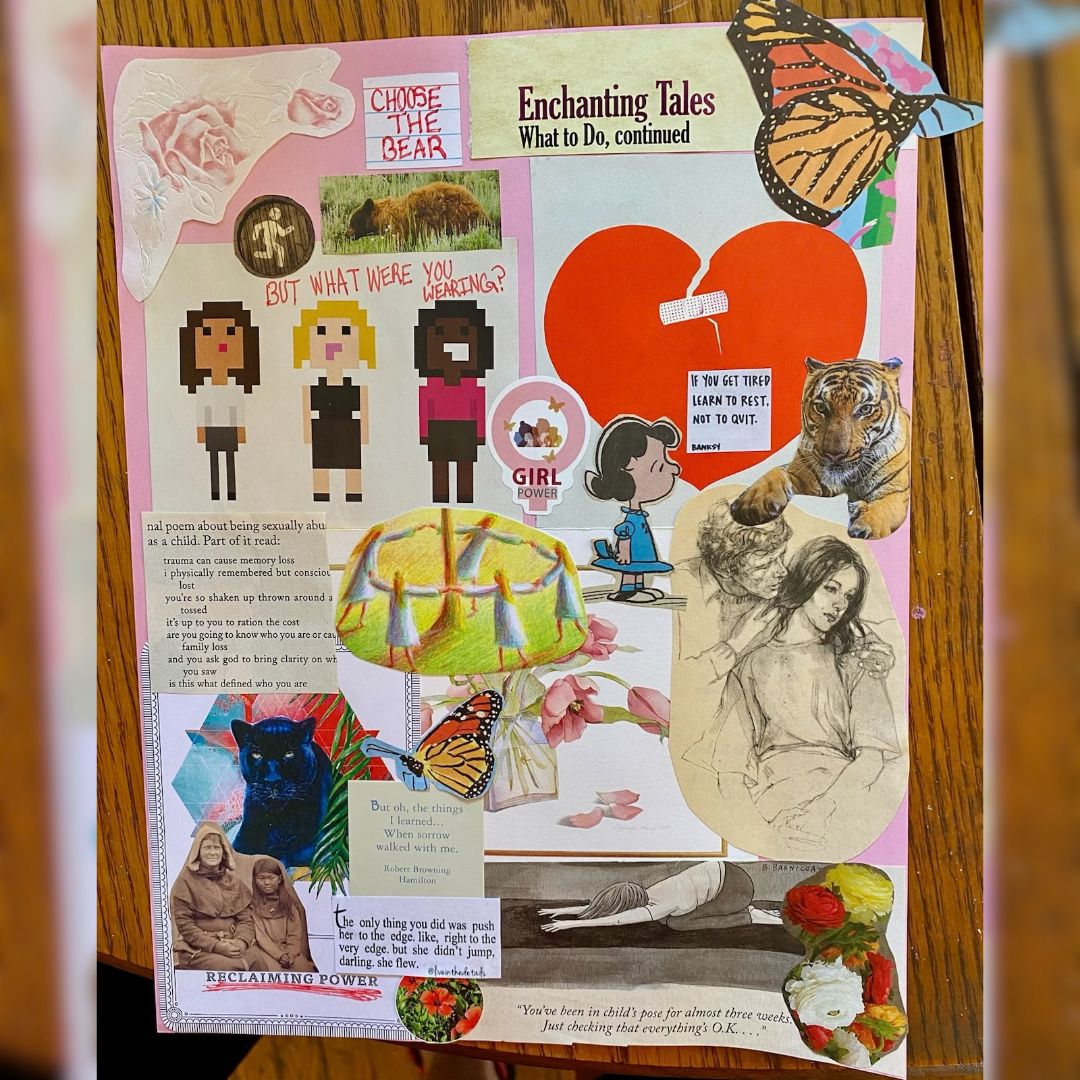
During Makerspace last week, a community member made a collage to express her thoughts and feelings about recent events. After sharing her art, a conversation ensued and everyone had an opportunity, who wanted one, to reflect. I greatly value these organic and spontaneous conversations. As Adrienne Maree Brown, author of Emergent Strategy wrote: “There is a conversation in the room that only these people at this moment can have. Find it.”
If you are feeling overwhelmed by the pain and suffering that you are witnessing in the world, then know that you are not alone. In many of my conversations, I hear people sharing how overwhelmed they feel about the state of the world, their country, their community, and their family. Folks often report they are experiencing so many different emotions, the very definition of overwhelm, that they do not know what to do. Unfortunately, this response is not uncommon. Overwhelm often immobilizes us, making it appear as though we are apathetic.
I know you are not apathetic. What I suspect is that you are in survival mode – just trying to make it through the day without complete collapse. For some of us, survival mode looks like isolation: limiting our interactions and travel to the bare minimum. For others, survival mode may look like escapism: engaging in activities that minimize our ability to witness or to experience pain. Neither isolation or escapism is bad or wrong. Both responses are natural reactions aimed at protecting our psyche. Isolation and escapism become problematic when we get stuck and are not able to move through our initial reactions.
If you are resonating with these words and are looking for ways to move away from or to avoid survival mode, then please check out the two practices delineated below. These suggestions are not comprehensive nor are they a substitute for professional help. If you are having thoughts of harming yourself or if you are consistently engaging in harmful behaviors, then please seek therapeutic services from a qualified professional. There is no medal for toughing it out and there is no shame in getting help. I don’t want anyone to suffer unnecessarily or for prolonged periods of time.
I also want to emphasize that feeling overwhelmed and defaulting to survival mode are common responses to system collapse. When institutions and structures that have historically been reliable (and imperfect) fail and go away, the system is collapsing. This is where we are. It is both scary and predictable. (This period in time is not unique. All empires fall.)
Think of the below suggestions as the beginning of a conversation in your journey toward sufficiency and kinship. If these activities spark your imagination and generate more ideas, then please share. I would love to learn about additional resources and receive new practices!
Wishing each one of you pockets of restoration and joy!
Love,
Kim
Build Resiliency: Two strategies to prevent collapse
ㆍ Practice sufficiency. Sufficiency is the idea that we have exactly what we need – no more and no less. Instead of focusing on abundance – having more than what we need – or fretting about not having enough, sufficiency asks us to believe that there is enough for everyone.
One of the truths about sufficiency is what you appreciate appreciates. This truth underscores the power of intention and attention. One way to put this truth into practice is to choose a focus that you want to see grow.
Ask yourself: What is a quality or characteristic that I want to cultivate among my people or in my community? Then observe the times and places where you experience this quality. Notice how you and others respond when the quality or characteristic is present. What behaviors seem to encourage the desired quality?
When our children were in grade school, my partner was laid off from work. This loss of income was particularly scary because I just left a full time position to begin a private therapy practice. After the initial shock wore off, my partner and I discovered that we needed less income than we thought to live well. We ate out less because we had more time to cook at home. We found inexpensive ways to have fun with our children. It was easier to engage with our friends and family because we did not have as many work commitments. What began as a frightening event ended up being one of the most idyllic times in raising our family. This experience taught us that when we focused on what we loved, it grew.
ㆍ Seek collaborations. There are many things that we can do by ourselves. There are many things that we can do faster by ourselves. I still want you to seek collaborations. Modern culture emphasizes productivity and competition. There is constant pressure to do more and to do it as fast as you can. This go-go-go mentality does not serve you (only the shareholders) and it certainly does build trust or relationships.
Instead of thinking of your day as a series of tasks or chores to accomplish, I invite you to create a map that reflects the ecosystem in which you live. Notice how your choices impact the world around you and notice how others, including non-humans, impact you. If you have an animal companion, then you already know one living being is greatly affected by your choices and vice versa.
Once you have a draft of your ecosystem, then notice where you have opportunities to collaborate. Start small and go for the low-hanging fruit. Is there a simple task that you could do with another person? Is there an activity that would be more fun to do in a group? Is there an opportunity to learn a new skill and to ask someone to teach you? Is there a project that feels stagnant and could benefit from a fresh perspective?
I have found that it is really fun to invite people to cook with me. One time I asked a group of women to bring an ingredient to add to a pot of soup. Since there was no “sign-up sheet,” initially there were concerns about people bringing the same ingredient. I encouraged the women to trust the process and to keep their ingredients a surprise. The mystery made the evening fun. As the ingredients were unveiled, ideas were tossed around about how to use them. We had fun putting the soup together and everyone thought the soup was delicious. I am not surprised: collaboration is very sweet.
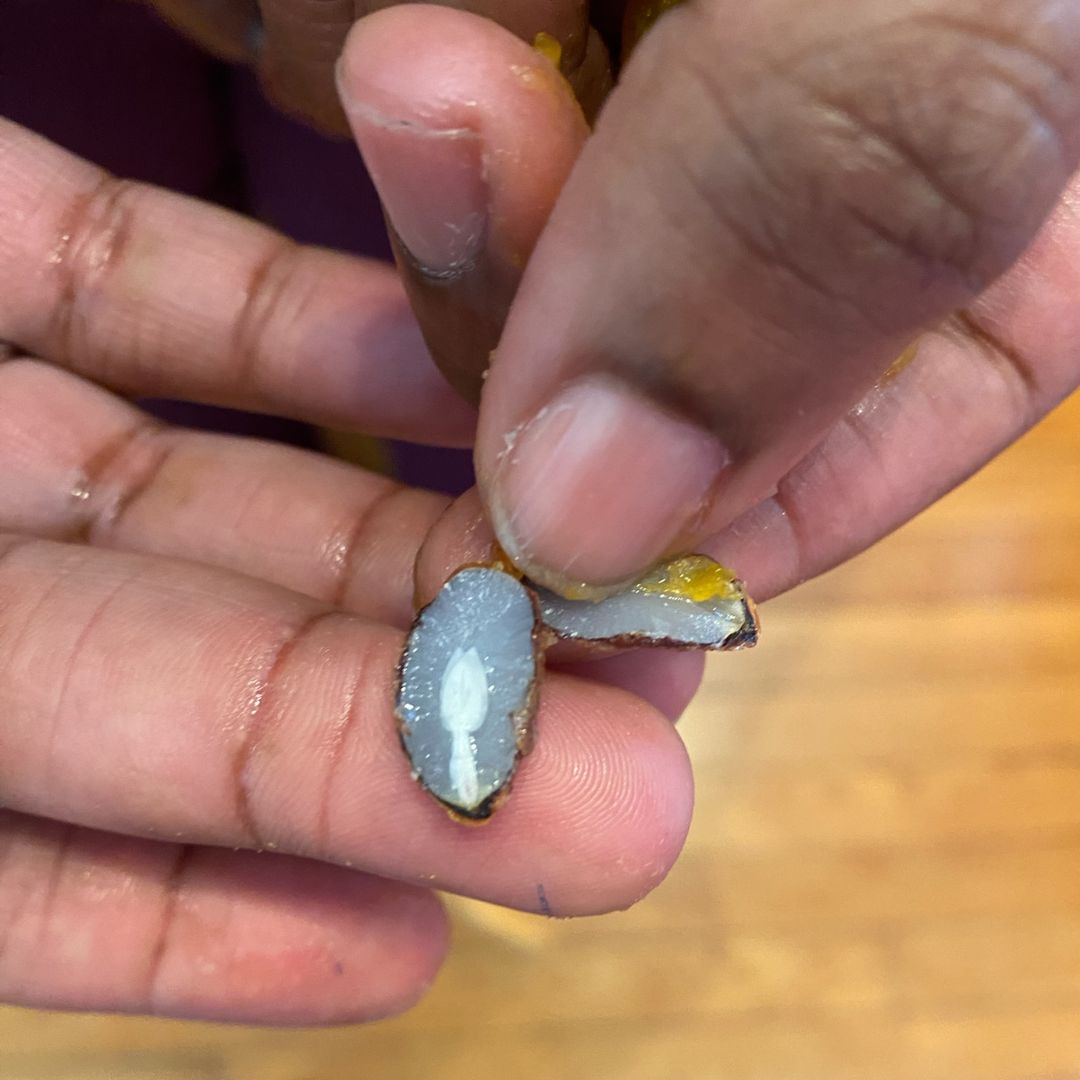
We cut a seed from the fruit of the Shakti persimmon tree and saw a spoon.
It looks like we will have snow to shovel this winter!
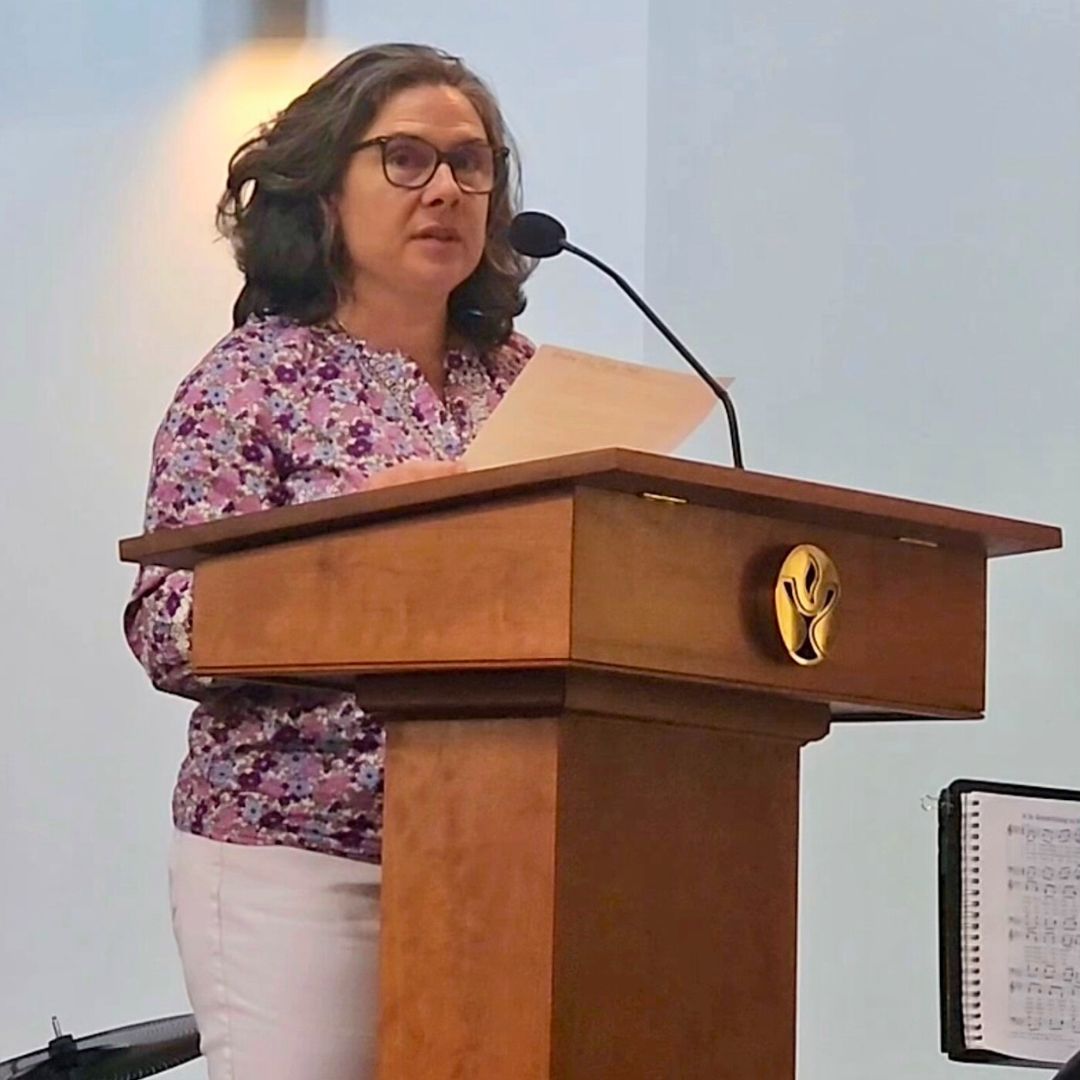
For nearly thirty years, Kim Bushore-Maki has served Appalachia as both a pioneer and champion of holistic well-being and community health.
A licensed clinical counseling professional, she became the first Master level clinician at East Tennessee State University's Counseling Center, where she provided therapeutic services and directed the Sexual Violence Prevention Program and the Alcohol and Drug Prevention Program.
During her tenure at ETSU, she was a founding organizer of the Tennessee Coalition for Healthy and Safe Campus Communities as well as Tennessee's representative for the National Prevention Network. She drafted ETSU's first Sexual Violence Response Policy and coordinated the region's first "Take Back the Night" program and fundraiser (the oldest worldwide movement to stand against sexual violence in all forms), the proceeds of which funded the first SANE nurses at the Johnson City Medical Center. Kim also served as Interim Director of Disability Services for 11 months.
In 2010, Kim followed her intuition and vision to found Shakti in the Mountains, a thriving healing-arts center that draws on somatic expressive therapy, archetypal psychology, wisdom traditions, and regenerative economics. Kim continues to maintain a small private therapy practice and also leads healing programs and retreats, guides the Shakti Stewardship Program, and serves as a community-building consultant to justice-oriented initiatives committed to building safe, inclusive, vibrant, and resilient communities.
Sign up here to receive updates on free community events, workshops, and more.

Support, Connect, and Grow with Us
Invest in a future where the feminine thrives, and the collective energy we build helps uplift everyone involved. Together, we can keep this space open, accessible, and flourishing for all.