Like many of you, I am mourning the death of Dolly Parton, who died on August 25 at the age of 80. As one woman wrote on social media, How am I gonna wake up, stumble into the kitchen, and pour myself a cup of ambition in a world without Dolly Parton?
It is hard to believe that she is gone. Her larger than life persona and her incredible generosity fooled a lot of us into thinking that she would live forever. Really, we just wanted to keep her to remind us that there is good in this world. Dolly Parton was the best of us. She taught us to take up space, to believe in ourselves, to look for the good in others, to share what we have, to walk away from mean people, and not to judge.
Her signature tall heels and big wigs belied her petite five-foot frame which held a mountain of talent and kindness. Born to Avie Lee and Robert Parton in a small cabin located in Sevier County Tennessee, Dolly was the fourth of twelve children. The family had no electricity or running water and struggled to make ends meet. Despite the family’s financial difficulties, Dolly always emphasized how rich her family was with love. Her song, The Coat of Many Colors, which Dolly said was her favorite song that she wrote, best illustrates her philosophy with the lyric: One is only poor, only if they choose to be.
Dolly never forgot her humble beginnings. The actor Julia Roberts tells a story about working with Dolly on the set of Steel Magnolias: a movie filmed in the incredible hot, swampy weather of Lousianna. One day, Julia said, when everyone was attempting to stave off the heat by putting ice on their wrists, Julia turned to a very composed Dolly and said: “Come on, Dolly. You got to be hot wearing that wig and that wool coat in this heat. You can say that it is hot.” Dolly replied, “When I was a little girl, I wanted to be famous, and I wanted to be rich, and now I’m both of those things. I am not going to complain about it.”
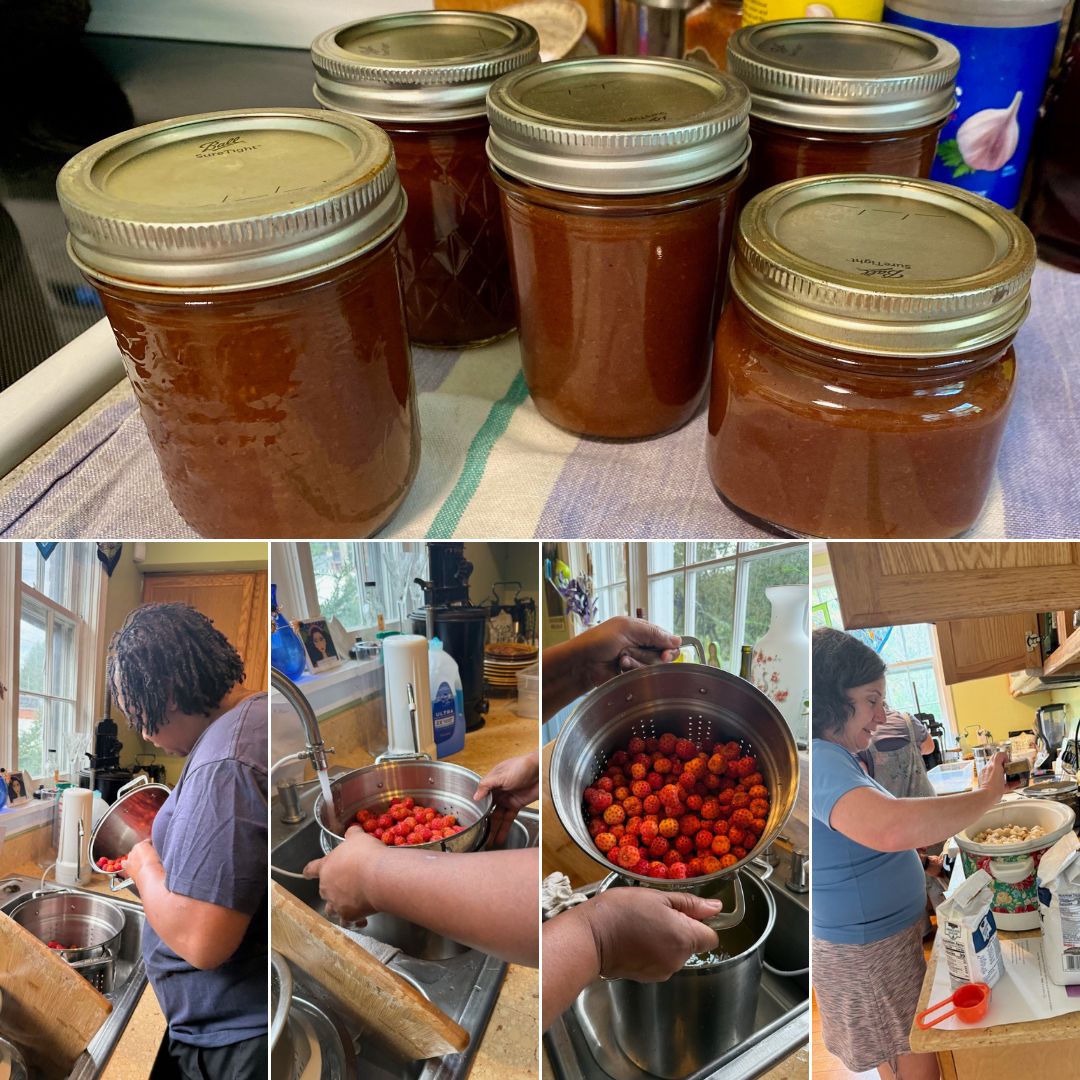
We made Pear Butter with local pears donated by a Shakti Angel. We were processing not only the pears but Kousa berries.
Dolly was a prolific and talented songwriter. Over the course of her life, she wrote more than 3,000 songs. (She recorded and released 956 individual song titles.) Two of her most famous songs, Jolene and I Will Always Love You, were written on the same day! Many of her songs were performed by other artists. Perhaps the most well known example is Whitney Houston’s rendition of “I Will Always Love.” Dolly used the royalties generated by this recording to invest in property in a predominantly Black neighborhood in Nashville, calling the investment “the house that Whitney built.”
Throughout her life, Dolly invested in people. She believed that dying a billionaire was a “moral failing.” In 1986, she lent her name to a theme park in her hometown with the intention of creating financial stability. Dollywood has created over 23,000 jobs in the local community. Its economic impact, both direct and indirect, is estimated at 1.8 billion dollars annually. Because Dolly invested in her community, Sevier County is now the third highest tax revenue generator in the state of Tennessee, behind Nashville and Memphis.
The success of Dollywood led to the formation of the Dollywood Foundation which provides educational scholarships to Sevier County students and funds Dolly’s Imagination Library. For over 30 years, the Imagination Library provides a free book a month, from birth to age five, to any child who registers. Currently the library sends 3.4 million books every month. Dolly, whose own father could not read or write, made it her mission to address children’s literacy. Her Imagination Library is now in five different countries.
Dolly also showed up for her community in 2016 when wild fires destroyed many homes and businesses in Gatlinburg and the surrounding area. She distributed over $12 million dollars, in monthly increments, to local households – no questions asked – playing a pivotal role in the rebuilding of that community.
Dolly also contributed to healthcare. She donated millions to pediatric cancer research and to children’s hospitals. In 2020, she gave 1 million dollars to help Moderna develop a COVID-19 vaccine.
Dolly was not only generous. She was kind. She celebrated all people and was a staunch ally of the LGBTQ+ community. Dolly never hid or excused her Appalachian roots. She made Appalachians proud. To learn more about her life and legacy, I recommend listening to the podcast, Dolly Parton’s America, created by Jay Abumrad and Shima Oliaee.
Shakti is proud to be a sponsor of the Appalachian Equality Chorus. To learn more about this incredibly talented organization, go to https://appalachianequalitychorus.org
I know that there is more to say and to feel about the impact Dolly Parton had on the world. These words are just a glimpse of the woman who is going to be missed by so many of us. In my home office, directly across from where I write, is a magnet that says “What would Dolly do?” I look at this magnet at least once a day. Every time that I see it, I am reminded that each one of us is capable of making choices that exemplify Dolly Parton’s light. We can continue her legacy. I plan to.
With much love,
Kim
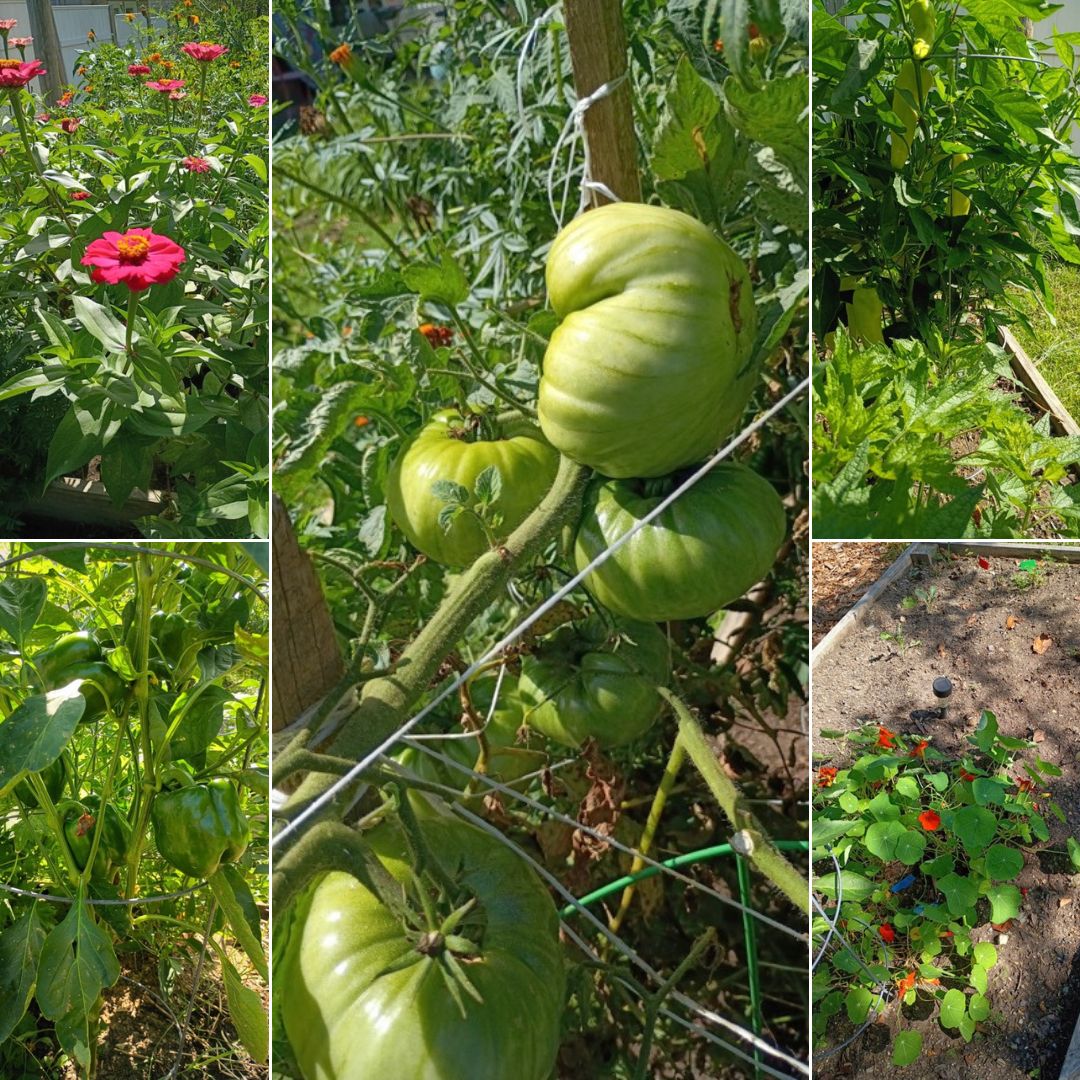
The Shakti Garden is going strong. Still harvesting vegetables and enjoying the beautiful blooms. The fall crop was just planted. If you want to get involved, reach out to our head gardener Cleo (hankinscleo@gmail.com).
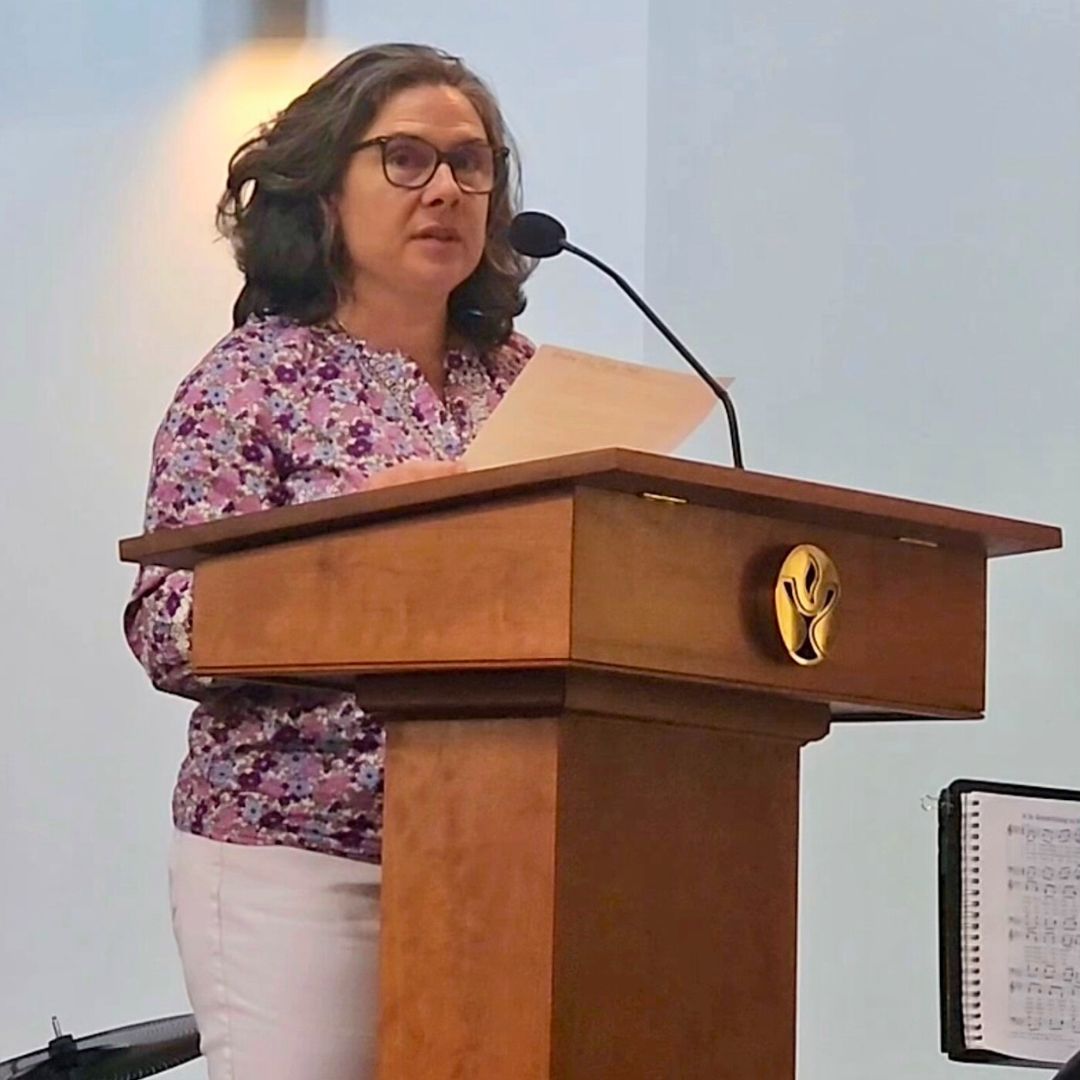
For nearly thirty years, Kim Bushore-Maki has served Appalachia as both a pioneer and champion of holistic well-being and community health.
A licensed clinical counseling professional, she became the first Master level clinician at East Tennessee State University's Counseling Center, where she provided therapeutic services and directed the Sexual Violence Prevention Program and the Alcohol and Drug Prevention Program.
During her tenure at ETSU, she was a founding organizer of the Tennessee Coalition for Healthy and Safe Campus Communities as well as Tennessee's representative for the National Prevention Network. She drafted ETSU's first Sexual Violence Response Policy and coordinated the region's first "Take Back the Night" program and fundraiser (the oldest worldwide movement to stand against sexual violence in all forms), the proceeds of which funded the first SANE nurses at the Johnson City Medical Center. Kim also served as Interim Director of Disability Services for 11 months.
In 2010, Kim followed her intuition and vision to found Shakti in the Mountains, a thriving healing-arts center that draws on somatic expressive therapy, archetypal psychology, wisdom traditions, and regenerative economics. Kim continues to maintain a small private therapy practice and also leads healing programs and retreats, guides the Shakti Stewardship Program, and serves as a community-building consultant to justice-oriented initiatives committed to building safe, inclusive, vibrant, and resilient communities.
Sign up here to receive updates on free community events, workshops, and more.

Support, Connect, and Grow with Us
Invest in a future where the feminine thrives, and the collective energy we build helps uplift everyone involved. Together, we can keep this space open, accessible, and flourishing for all.