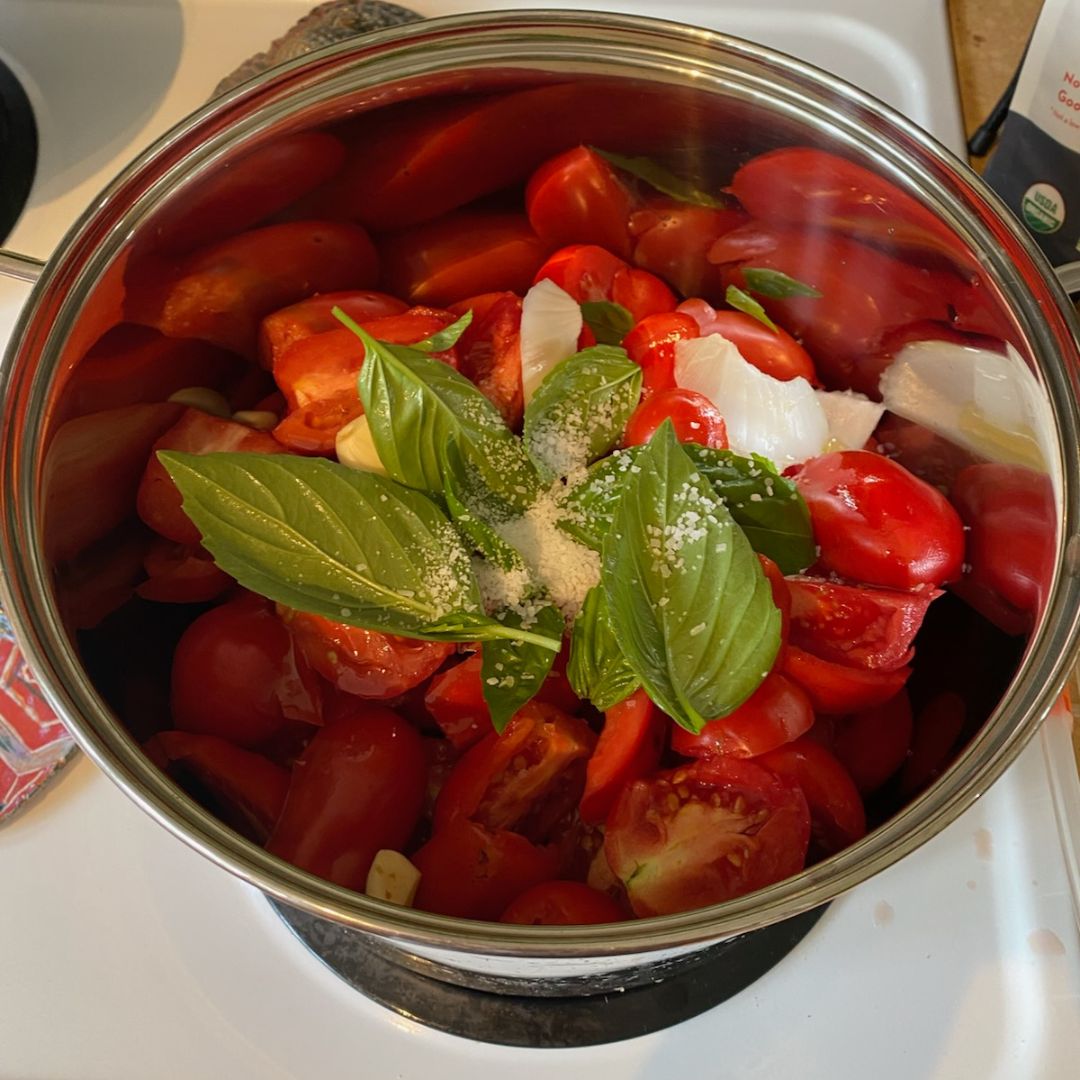
Thank you Sarah for sharing your tomato harvest with us! We made marinara sauce and salsa to be enjoyed by the community.
One of the paradoxes or dilemmas that all humans must navigate is finding the balance between serving our individual needs and serving our community needs. I picture this paradox as a seesaw with personal needs on one end of the board and community needs on the other end.
Sometimes both needs are equally balanced and the seesaw is parallel to the ground. Other times the seesaw resembles a slide with one end of the board high above the ground. Seesaw placement varies over the course of one’s lifetime and often depends on the time and place you are in your life, familial and cultural expectations, and your mindset.
As you may imagine, our personal health and our community’s health is reflected in the way that each one of us navigates our needs. In his book, Community: The Structure of Belonging, Peter Block draws a parallel between a community’s health and the context, or set of beliefs, that “dictate how we think, how we frame the world, what we pay attention to, and consequently how we behave.” (p.29)
Block argues that healthy or regenerative communities are ones that:
- Focus on possibilities
- Identifies with their “gifts, generosity, and accountability of its citizens”
- Believes that it already has “the capacity, expertise, programs, leaders, regulations and wealth required to end unnecessary suffering.” (p.30)
We are in voting season. In Tennessee, where I live, we have state and federal primary races as well as county offices and local judicial elections on August 7. (Early voting is happening now. No matter where you live, check out Vote 411 to register as well as to see a sample ballot. You can make a voting plan by entering your address.)
I encourage you to look at the candidates and check out their websites to learn how each candidate shapes the narrative of their community. Do they:
- Focus on possibilities or frame every issue as a “problem?”
- Inspire hope or fear about our community’s future?
- Use tragedies and genuine concerns to advocate for more oversight and regulation?
- Offer solutions to current challenges or do they offer platitudes?
If the candidate is an incumbent, then check out their previous voting record. Notice who their biggest campaign donors are. Are they voting in the best interest of your community or are they voting for the special interest groups that donated large sums to their campaign?
Voting for local offices matters! Local law and policy makers impact your life more than at a federal level. Historically, where I live, we have not had much, if any, choice of candidates. This election season that is not true! I am happy to share that most offices have at least two candidates from which to choose. Your vote is one step toward creating a community which is responsive to citizens’ needs without exploiting natural resources or prioritizing corporations’ profits. Voting is one way to balance the aforementioned seesaw.

Thank you Kenniesha for teaching us to sew our first blouse. Looking forward to learning more from you!
Another step toward building a regenerative community is to reflect on your belief system. Do your actions align with your beliefs? For example, if you believe there is enough food to feed everyone, then what actions are you taking to eliminate food insecurity and to redistribute food surplus? I am not suggesting grand gestures. I believe that small, every day actions are integral to long-lasting, sustainable change. Gestures like:
- Donating to Little Free Pantries
- Sharing food from your garden
- Encouraging potlucks opposed to dining out
- Contributing to mutual aid meals
- Volunteering at your local food bank or soup kitchen
The goal is not to overwhelm yourself. Start with one small, executable action and notice how you feel. Ask a friend to join you. Give yourself permission to experiment. Your first attempts may be messy. Learn from them and innovate. Seesaws are built for fluctuations and are not met to be perfectly still.
Friendly reminders:
- We are still collecting school supplies for Vincent Dial Day. If you want to contribute, then please drop off school supplies no later than this Friday, July 24, by 5 pm.
- Spread the word. Our second Community Clinic is this Saturday, July 25, from 2 to 5 pm. Receive acupuncture with a $10 donation (cash) to be paid at the door. This clinic is one way that Shakti is engaging in regenerative practices.
Wishing everyone a wonderful week!
Love,
Kim
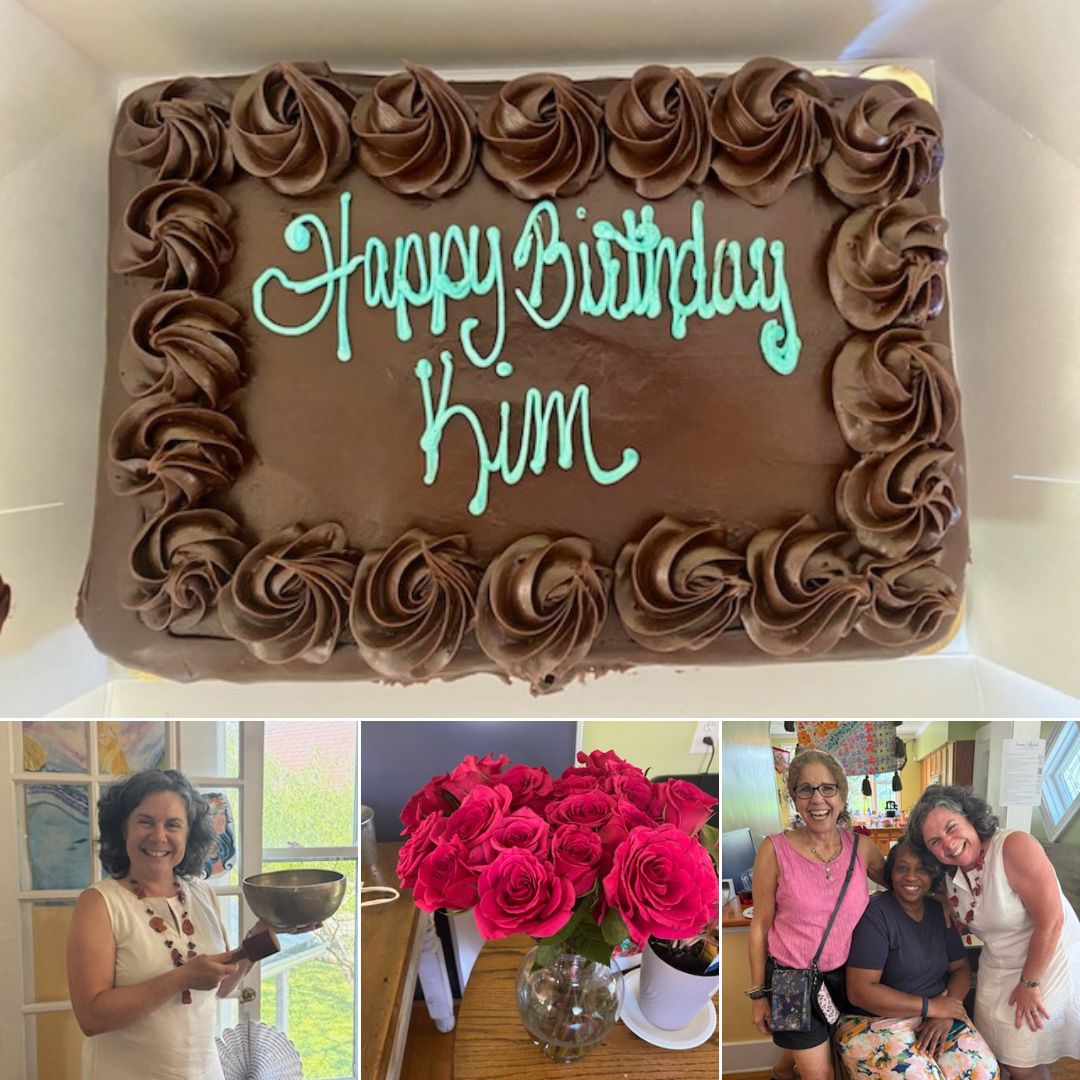
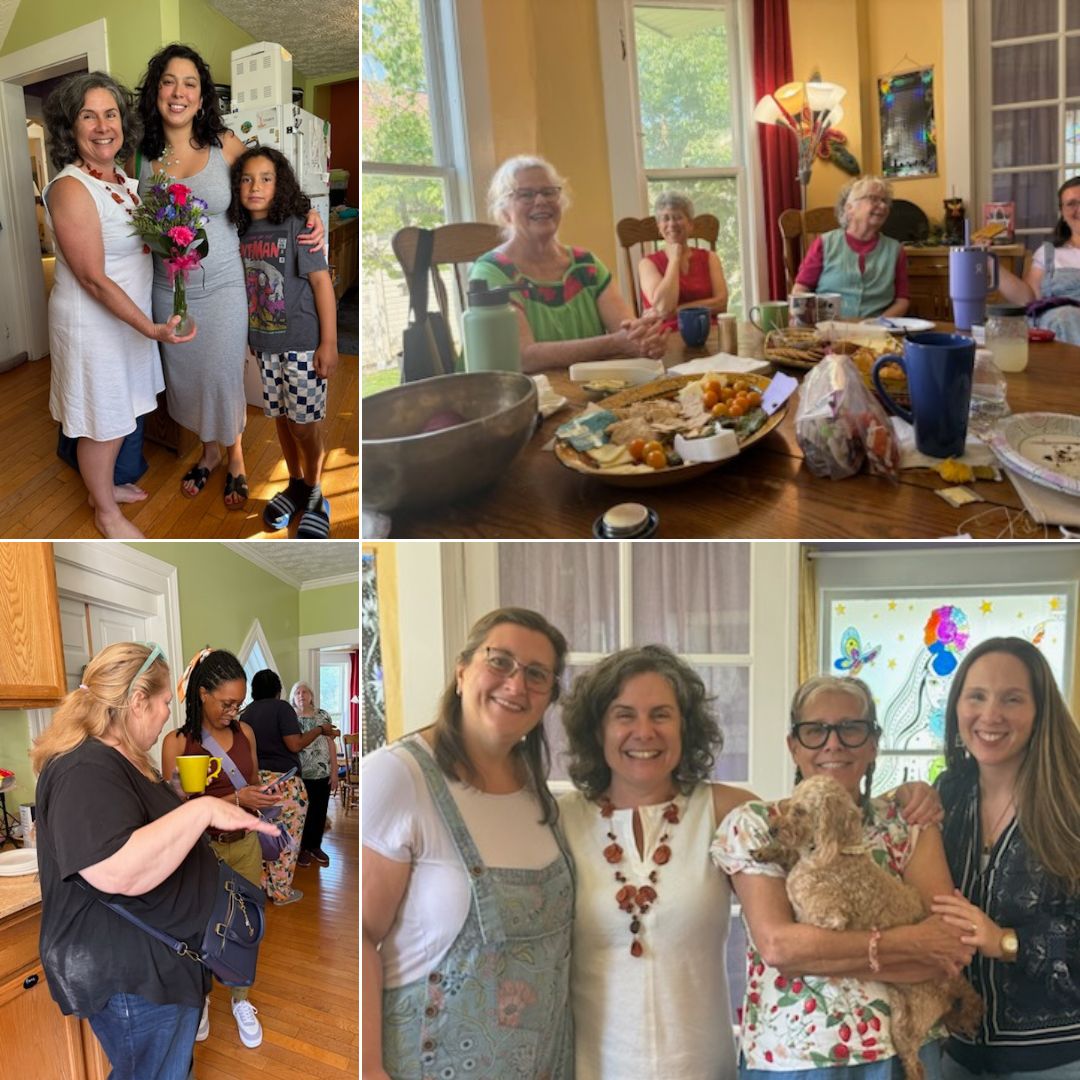
Thank you to everyone who came or contacted me on my birthday! Being surrounded by kind people was the best way to celebrate. I definitely felt the love!
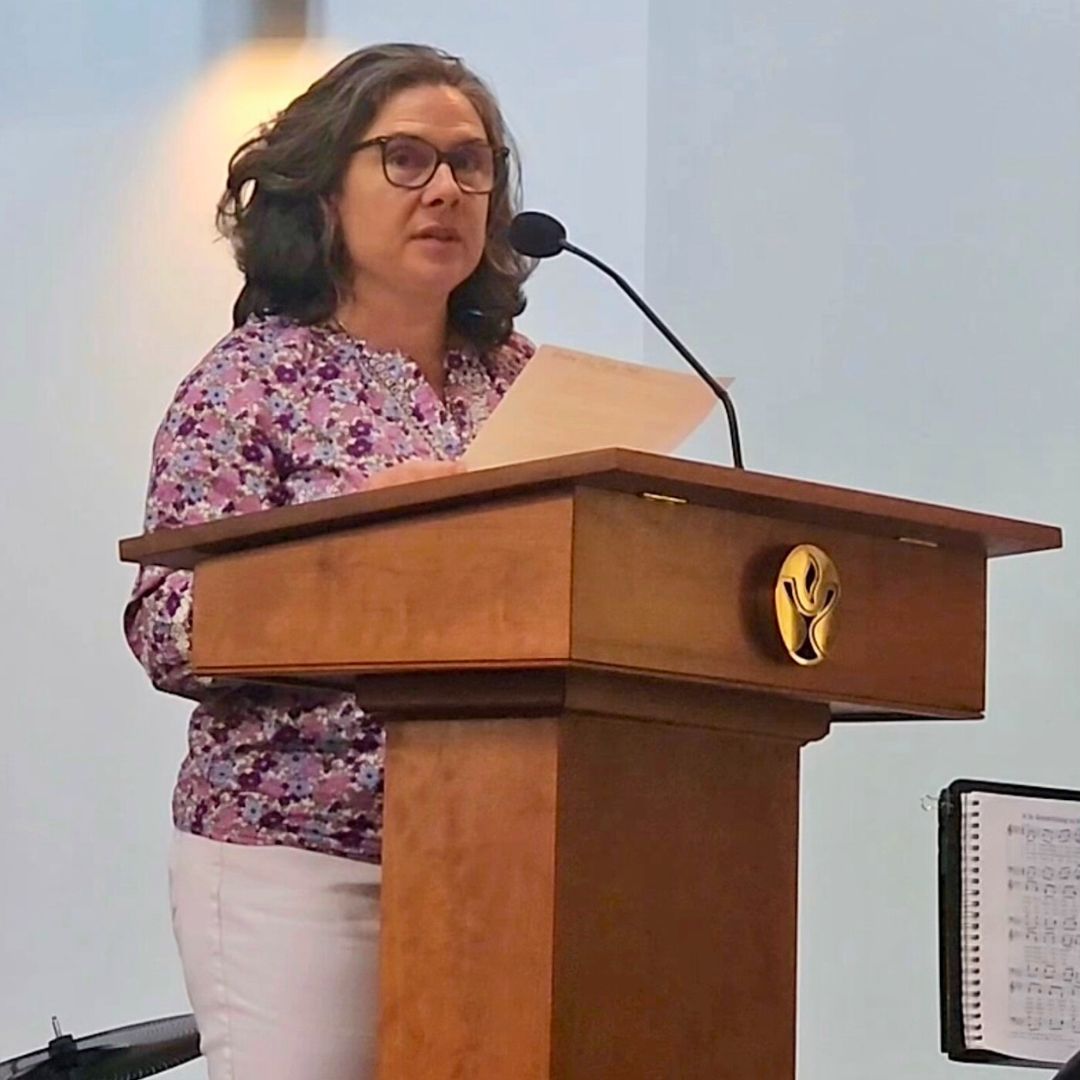
For nearly thirty years, Kim Bushore-Maki has served Appalachia as both a pioneer and champion of holistic well-being and community health.
A licensed clinical counseling professional, she became the first Master level clinician at East Tennessee State University's Counseling Center, where she provided therapeutic services and directed the Sexual Violence Prevention Program and the Alcohol and Drug Prevention Program.
During her tenure at ETSU, she was a founding organizer of the Tennessee Coalition for Healthy and Safe Campus Communities as well as Tennessee's representative for the National Prevention Network. She drafted ETSU's first Sexual Violence Response Policy and coordinated the region's first "Take Back the Night" program and fundraiser (the oldest worldwide movement to stand against sexual violence in all forms), the proceeds of which funded the first SANE nurses at the Johnson City Medical Center. Kim also served as Interim Director of Disability Services for 11 months.
In 2010, Kim followed her intuition and vision to found Shakti in the Mountains, a thriving healing-arts center that draws on somatic expressive therapy, archetypal psychology, wisdom traditions, and regenerative economics. Kim continues to maintain a small private therapy practice and also leads healing programs and retreats, guides the Shakti Stewardship Program, and serves as a community-building consultant to justice-oriented initiatives committed to building safe, inclusive, vibrant, and resilient communities.
Sign up here to receive updates on free community events, workshops, and more.

Support, Connect, and Grow with Us
Invest in a future where the feminine thrives, and the collective energy we build helps uplift everyone involved. Together, we can keep this space open, accessible, and flourishing for all.